
Veteran Bharatiya Janata Party leader and former Union minister Thaawarchand Gehlot on Sunday took oath as the 19th Governor of Karnataka succeeding Vajubhai Rudabhai Vala.

"You (banks) can go get clarification from the apex court. If SC says there is no stay, then we will hear this matter. But till then it would not be proper for us to hear the petitions or grant any relief as the apex court is already seized of the issue," Justice Oka said.

The Supreme Court of India has ruled that maternity leave is a fundamental right and cannot be denied to a woman based on the number of children she has from previous relationships. The court overturned a Madras High Court decision that had denied maternity leave to a Tamil Nadu government school teacher who had two children from a previous marriage. The Supreme Court emphasized the importance of reproductive rights, including maternity benefits, as part of international human rights law. The court also highlighted the right to life under Article 21 of the Indian Constitution, which includes the right to health, dignity, and reproductive choice. The decision has significant implications for women's rights and reproductive healthcare in India.

The Supreme Court of India has directed the tree authority of the Brihanmumbai Municipal Corporation to halt any further tree felling in Mumbai's Aarey colony without its permission. The order comes after the Mumbai Metro Rail Corporation Limited (MMRCL) informed the court that there were no pending proposals to cut more trees in the area. The court has previously permitted the felling of a limited number of trees for a metro rail project, but has also imposed penalties on the MMRCL for exceeding its permitted limits.
A bench of Justices Abhay S Oka and Augustine George Masih therefore directed the Delhi police commissioner to immediately inform all the stakeholders concerned about the ban order and ensure no sale and manufacture of crackers.

The Supreme Court has expressed its dissatisfaction with the Delhi Police's handling of appeals against acquittals in the 1984 anti-Sikh riots cases. The court emphasized the need for serious and earnest prosecution, not just for the sake of it. This comes in the wake of a public interest litigation filed by a former Shiromani Gurudwara Prabhandak Committee member, seeking justice for the victims of the violence.

The Supreme Court of India will examine the jurisdiction of the Lokpal, India's anti-corruption ombudsman, in entertaining complaints against sitting high court judges. The court is considering a suo motu proceeding initiated over the Lokpal's January 27 order on the issue. The case involves two complaints filed against a sitting additional judge of a high court, alleging that he influenced a judge of the subordinate judiciary and a judge of the same high court set to deal with a suit filed against the complainant by a private company.

The Supreme Court of India has refused to relax the ban on firecrackers in the Delhi-NCR region, citing continued alarming levels of air pollution. The court emphasized the right to a pollution-free atmosphere as a fundamental right, stating that the ban is necessary to protect public health. The court also highlighted the issue of noise pollution caused by firecrackers. The decision comes after a batch of petitions were filed by firecracker manufacturers seeking relaxation of the ban.
The Supreme Court of India has declined to interfere with the bail granted to 17 members of the Popular Front of India (PFI) in connection with the 2022 murder of Rashtriya Swayamsevak Sangh (RSS) leader Srinivasan in Kerala. The court noted that the Kerala High Court, which granted bail, has the power to revoke it if the conditions are violated. The NIA had sought cancellation of the bail, alleging the accused had violated bail conditions and contacted witnesses. The accused are also facing trial for allegedly instigating communal violence in Kerala and other parts of the country.
The Supreme Court of India has reprimanded the central government for failing to implement a cashless treatment scheme for road accident victims. The court expressed its concern over the delay in formulating the scheme, which is designed to provide immediate medical care to accident victims within the crucial "golden hour." The court highlighted that despite a statutory provision requiring the scheme's implementation, the government has not taken any action, prompting the court to intervene. The court also criticized the General Insurance Council (GIC) for raising objections to the scheme and delaying its implementation. The court has now directed the government to notify the scheme within a week and has scheduled a hearing on the matter for May 13.

The Supreme Court on Tuesday imposed a cost of Rs 50,000 on the Centre for filing an appeal against an order of the Armed Forces Tribunal, which granted a liberalised pension to the widow of a soldier who died during a counter-terrorism patrol in Jammu and Kashmir.
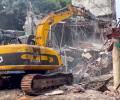
The Supreme Court of India has criticized the Uttar Pradesh government and Prayagraj Development Authority for the demolition of homes in the city, calling the actions "inhuman and illegal." The court ordered the authority to pay Rs 10 lakh compensation each to the homeowners, stating that the demolitions were carried out in a "high-handed" manner without following due legal process. The petitioners, whose homes were demolished, argued that the state government wrongly believed the land belonged to gangster-politician Atiq Ahmed. The Allahabad High Court had previously rejected their plea challenging the demolition.

The top court was hearing a plea filed by Tushar Gandhi, the great grandson of Mahatma Gandhi, seeking speedy investigation in the case.

In a significant order, the Supreme Court has restrained the Enforcement Directorate from accessing and copying content from electronic devices seized during searches against Santiago Martin, also known as the 'lottery king', his relatives, and employees.
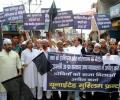
The Supreme Court of India granted bail to eight convicts in the 1987 Hashimpura massacre case. The case involved the killing of 38 people by personnel of the Provincial Armed Constabulary. The court considered the fact that the convicts have been incarcerated for over six years following the Delhi High Court's reversal of their acquittal by the trial court.

The Supreme Court of India has ruled that foreign nationals facing criminal charges cannot be allowed to leave the country. The court emphasized the need to ensure the presence of foreigners during criminal proceedings and outlined procedures for enforcing this restriction. The ruling clarifies legal provisions related to foreigners' movements in India, particularly during bail applications.
Mehta said both the petitioners were not from Gujarat and it needs to be seen whether in such case a writ petition can be filed.

A bench of Justices Abhay S Oka, Ahsanuddin Amanulllah and Augustine George Masih said the Commission for Air Quality Management in National Capital Region and Adjoining Areas Act of 2021 (CAQM Act) was enacted without creating required machinery for implementing the provision to curb air pollution.

The Supreme Court of India has ruled that the offence of abetment of suicide should not be invoked mechanically against individuals, emphasizing that the provision should not be used to soothe the feelings of grieving families. The court stressed that the conduct of the accused and the deceased, their interactions, and conversations preceding the death should be examined practically and not divorced from real-life contexts. The judgment came after a plea challenging an order of the Madhya Pradesh High Court that refused to discharge a man from charges under Section 306 of the Indian Penal Code (IPC) related to a suicide case. The Supreme Court emphasized that to prove abetment of suicide, there must be evidence of active instigation or acts facilitating the suicide. In this case, the court found that the appellant's actions, including seeking repayment of a loan, did not constitute instigation to suicide.
In 1997, the seven-judge bench ruled that the Centre had the regulatory power over the production of industrial alcohol. The case was referred to the nine-judge bench in 2010.
A bench of Justices Abhay S Oka and Pankaj Mithal said the agency cannot cast aspersions on the entire judiciary in West Bengal.
The SC questioned the Delhi government over delay in implementation of stricter anti-pollution measures under GRAP-4, and said it will not allow scaling down of the preventive measures without its prior permission.

The Supreme Court of India expressed concern over the appointment of DMK leader V Senthil Balaji as a minister in the Tamil Nadu government despite pending money laundering cases against him. The court questioned the state government's decision, stating it is "terribly wrong" to appoint a person as a minister while facing legal proceedings. The matter has been adjourned to January 15, 2025.
The Supreme Court of India censured the Assam government for keeping persons declared foreigners in detention centers indefinitely and not deporting them. The court questioned the state's explanation for not sending nationality verification forms to the Ministry of External Affairs, stating that detainees should be deported immediately once identified as foreigners. The court directed the Assam government to initiate the deportation process of 63 declared foreign nationals whose nationality was known and file a status report in two weeks. The court also directed the Centre to provide details of those deported and how it plans to deal with detainees whose nationality is unknown.

"Are you waiting for some muhurat," the Supreme Court remarked on Tuesday as it came down heavily on the Assam government for keeping people declared as foreigners in detention centres indefinitely rather than deporting them.

The court asked the civic body to file an affidavit on this.

The Supreme Court verdict on mining royalty case will give a further jolt to the Indian mining industry and will have very large financial implications, as arrears may work out to the tune of more than Rs 1.5 lakh crore to Rs 2 lakh crore, industry players said on Wednesday. The Supreme Court on Wednesday upheld the power of states to levy tax on mineral rights and mineral-bearing land, and allowed them to seek refund of royalty from April 1, 2005 onwards. According to a senior mines ministry official, the verdict will have a very large financial impact on mining, steel, power and coal companies.

Prior to the swearing-in of Justices Hima Kohli, Nagarathna and Bela M Trivedi, only eight women judges, including sitting judge Justice Indira Banerjee, were appointed as apex court judges.

A bench of Justices BR Gavai and Abhay S Oka said the governments must ensure that action is taken against erring officials.

In a development that may encourage increased investment in commercial real estate, the Supreme Court on Thursday gave the industry relief by permitting input tax credit (ITC) on construction expenses for buildings meant to be leased. "If the construction of a building was essential for carrying out the activity of supplying services, such as renting or giving on lease or other transactions in respect of the building or a part thereof, which are covered by clauses (2) and (5) of Schedule II of the CGST (Central Goods and Services Tax) Act, the building could be held to be a plant," said Justice Abhay S Oka and Justice Sanjay Karol.

The bench said the report submitted by the special judge indicates that he has 29 cases with him. In many cases, the trial has begun while in many others the trial is yet to begin.

The world has changed and the CBI should also, the Supreme Court observed on Monday while hearing a plea seeking guidelines for probe agencies on seizure, examination and preservation of personal digital and electronic devices and their contents.

The high court, however, upheld the ban on slaughter of cows and bullocks in the state.

The Bombay high court has asked Maharashtra government not to implement its proposed policy to revive the city's nightlife until adequate measures were taken to ensure the safety of women.

The Supreme Court on Thursday said constitutional courts cannot allow provisions of the Prevention of Money Laundering Act to become instruments in the hands of the Enforcement Directorate to continue incarceration for a long time.
The top court said that retaining the file of a case for five months after demitting office was an act of gross impropriety.
"The criminal justice system of ours can itself be a punishment," the Supreme Court observed while discharging three accused in an alleged abetment of suicide case which was registered way back in 2008 in Punjab.
The Supreme Court on Wednesday rejected the Centre's plea for prospective effect of its July 25 verdict, which upheld the power of states to levy tax on mineral rights and mineral-bearing land, and allowed them to seek refund of royalty from April 1, 2005 onwards.
The apex court said that the accused did not misuse his liberty by protesting and expressing his views and also rejected the request of the state government to impose a condition on Sattai to refrain from making scandalous remarks while on bail.

Even Ajmal Kasab was given a fair trial in our country, the Supreme Court on Thursday remarked and indicated it may set up a courtroom inside Tihar Jail for the trial of J-K separatist leader Yasin Malik in a kidnapping case.
